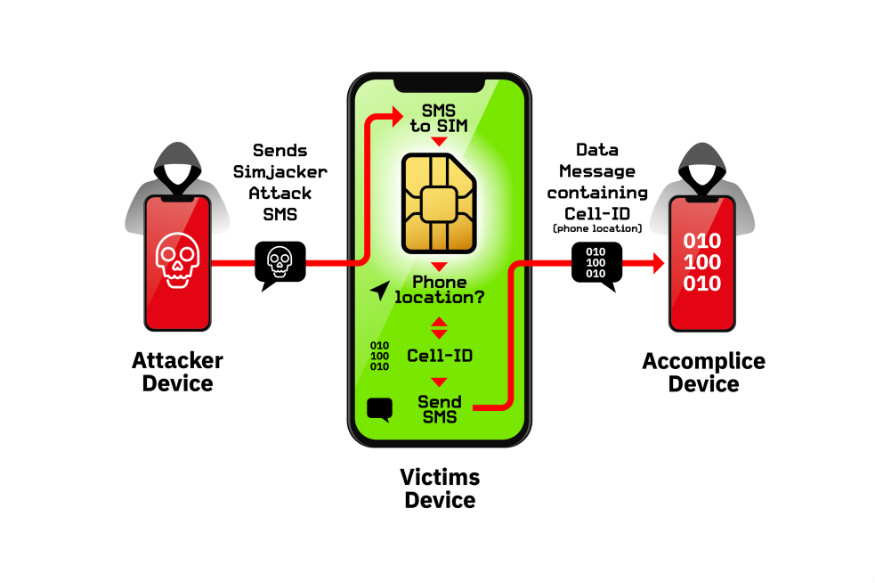
A network-related or instance-specific error occurred while establishing a connection to SQL Server. The server was not found or was not accessible. Verify that the instance name is correct and that SQL Server is configured to allow remote connections. (provider: Named Pipes Provider, error: 40 - Could not open a connection to SQL Server) Your Data, Location Might be Tracked with This SIM Card Flaw, Without Your Knowledge, Electronics & Gadgets : Today Indya

Latest News

Making Indian arbitration popular
Thursday, December 29, 2016 IST
Making Indian arbitration popular


Collective and sustainable growth is gradually bridging the gap between the developed and the developing nations globally. International trade and commerce today is not just multi-lateral in terms of diverse contracting State parties but it involves multiple legal jurisdictional issues. The ensuing challenge that majority of trans-national business houses anticipate is the prolonged dispute settlement battles and the cumbersome enforcement struggle thereafter.

Given the expanding global trade, fewer developed nations cannot anymore carry the burden of speedy and amicable dispute resolution for most of the world economies. The expertise of the West-based dispute settlement bodies often makes them economically unreachable for many. Developing nations are reasonable in their apprehensions of impartial nature of proceedings when pitted against the developed nation and administered in West conceptualised, nurtured and funded bodies.

The global trade community, nevertheless, has to manoeuvre through the distinct variety of legal systems, their capacities and weaknesses in establishing cross-border transactional activities. They do not prefer to get entangled between the strange justice system differences of the developing nations and the developed jurisdictions. International commerce thrives on the acceptable normative legal order whether emanating from a regional jurisdiction or a hybrid adoption of international legal flavour.

Indian Scenario

It is always a rare accomplishment for any State to emerge as the only viable dispute resolution arena. Independent, pro-active and progressive judicial orientation is the globally acceptable indicator to mark out any State as the most preferred play-field of international commercial dispute resolution. India is no exception. Owing to rise in India’s inward and outward foreign direct investment (FDI), the trans-national trade players partnering with India expect India to promise a modern dispute resolution law and a progressive judicial model which is arbitration friendly.

The expectation is genuine especially when regional partners like Singapore, Hong Kong, China and Japan already provide internationally acclaimed legislative and judicial amity to the similar group of global trade partners. Analytical investigation indicates that though India has not been an arbitration hostile jurisdiction yet it has not made inroads into the world’s cherished list of ‘arbitration destinations’. The problem does not lie in the present day Indian arbitration law or judicial vision. But there is a need for redeeming the goodness that Indian jurisdiction offers in this field.

The Arbitration and Conciliation (Amendment) Act of 2015 is the most recent legislative action which has revised the patent law in order to meet international standards. Impartiality of arbitrators is the fundamental challenge globally. The amended law has made categorical provision for identification of an arbitrator’s bias and substitution of the arbitrator thereafter. Timeliness is a worldwide expectation in matters of international commercial arbitration. Meeting global standards, the Indian law has made strict times for declaration of an award as well as the final timeline for setting aside or enforcement of an award.

Judicial Appreciation

Judicial deference towards arbitral awards and support for their easy and quick enforcement remains the non-negotiable characteristics of a truly arbitration-friendly jurisdiction. In the current decade, India on many occasions exhibited to the world its vibrant judicial vision for shaping India’s tryst with the next generation international arbitration legal order. The path-breaking rulings of the Indian judiciary bespeak the judicial independence courts enjoy in India to freely interpret the law in keeping with international standards and future of global trade.

The Bharat Aluminium Co. vs Kaiser Aluminium Technical Services (BALCO case) [(2012) 9 SCC 552] is one of the recent most cases that has set the tone for India to compete globally in boasting as the destination practising greater judicial deference towards foreign seated arbitration.

This case also declared Indian arbitration law to be Seat-Centric. In the year 2013, we also paved a way for referring non-signatories to an arbitration agreement to settle disputes through arbitration in the case of Chloro Controls (I) P. Ltd. v. Severn Trent Water Purification Inc. & Ors., [ 2013 (1) SCC 641]. The Supreme Court held that the expression ‘person claiming through or under’ as provided under Section 45 of the Arbitration Act would mean and include multiple and multi-party agreements. This judgment will have far-reaching positive effect especially in the cases of international commercial arbitrations involving composite tran actions and multiple parties.

More recently, in 2014, in the case of Associate Builders vs. Delhi

Development Authority (2014 SCC Online SC 937, the Supreme Court of India narrowed down the scope of public policy. We moved a step closer to adapt to the modern legal requirements and in the year 2014, through the judgement in the case of World Sport Group (Mauritius) Ltd. vs MSM Satellite (Singapore) Pte. Ltd., [(2014) 11 SCC 639] the Supreme Court has eased the arbitrability of cases involving all nations of fraud for referring such matters and parties to foreign seated arbitrations.

The trend of such pro-arbitration judgments delivered by the Indian judiciary is on the rise and the Supreme Court is constantly stabilising the global normative best practices of international commercial arbitration in India.

The Indian judiciary is determined to keep a close watch on the practice of international arbitration in the country and perform its role of a guardian to promote and encourage speedy, neutral, effective arbitration proceedings and enforcement of an award in the country. India is all set to take on the world arbitration market with its best foot forward.

Conclusion

The contemplation of devising newer methods to lure arbitration cases to Indian soil is still an ongoing exercise. Merely modernising the law and scaling up judicial commitment towards ensuring unbiased and expedient enforcement of arbitral award will not suffice. India has lately emerged as the key trade place with its flagship campaign of ‘Make in India’. It has become all the more imperative for our sub-continent to re-orient our in-house legal system, executive approach, and general trends of legal compliance and respect for boosting investors’ confidence in our arbitration law, policy and its execution apolitically.

The Indian judiciary has a greater responsibility to guard investors’ interests while at the same time ensuring that State policies are economically beneficial for the country and lead to sustainable development. Inappropriate State action for expropriating the assets of the foreign investor is a critical issue that needs careful judicial scrutiny.

The judicial role is increasingly important in timely disposal of arbitration-related applications concerning issues ranging from appointment of arbitrators to recognition, enforcement or setting aside of an arbitral award. In this realm of an effective arbitration regime, the Indian judiciary must live through the greater degree of judicial deference towards arbitral awards especially originating from foreign seats.

Undeniably, judicial institutions remain the champions of ensuring an efficient and effective arbitration regime in any country. The Indian judiciary is equally at the centre of the international arbitration

Discourse as guarantor of a robust arbitration regime. In order to compete with regional and neighbouring arbitration-friendly States, India will have to invest internally in strengthening the judiciary by increasing its workforce as well by promoting the highest level of judicial independence free from executive influence.

Under such promising circumstances, India shall proper in its FDI transactions both inward and outward along with its most recent ‘Make in India’ policy. It is relevant now to conceptualise a ‘National Arbitration Policy’ in line with the ‘National Intellectual Property Rights Policy’ to foster investor’s confidence in the Indian legal system. This will in turn also strengthen the Indian judicial institutions in re-orienting themselves and emerging as the regional champions of the international dispute resolution regime as Model Judicial Institutions, especially amongst the commonwealth sister States.


Source :


Related Topics


Trending News & Articles

 Article
The Top 5 Best USB/PD Phone Charger in India 2023

View Top 5 Mobile Chargers in India as on 08 Feb 2023. This rundown is compiled according t...

Recently posted . 5K views . 6 min read
 

 Article
India's Top 5 Mobile Charger manufacturer Brand 2019

The following list of India's Top 5 Mobile Charger manufacture Brand 2019  

Recently posted . 3K views . 0 min read
 

 Article
How to make you car as silent as a Rolls Royce inside

Rolls Royce cars are extremely luxurious. While there are many expensive pieces of equipment in Rolls Royce cars, their most relaxing feature is the silence that ...

Recently posted . 3K views . 2 min read
 

 Article
Mahindra XUV300 vs Maruti Brezza, Ford EcoSport, Tata Nexon – Price

XUV300 is the latest entrant in the compact SUV segment.

Recently posted . 3K views . 0 min read


More in National

 Article
Electric cars have various health benefits

Researchers suggest that the migration from polluting vehicles to electric vehicles could significantly reduce the incidence of cardiopulmonary illness due to air...

Recently posted. 994 views . 1 min read
 

 Article
TCL Launches New Android Smart TVs, Sound Bar, and Smart Home Appliances in India: Check Price, Features

HIGHLIGHTS   • New TCL smart TVs start at Rs. 59,999

Recently posted. 1K views . 2 min read
 

 Article
Microsoft Cortana SDK to Bring Voice Assistant to Wide Ecosystem of Devices; Translator Tool Unveile

Microsoft is gearing up to bring Cortana to your clever home as a virtual assistant that is to be had anywhere you need it. The agency on Tuesday made the ...

Recently posted. 757 views . 24 min read
 

 Reviews
Best Earphones Under Rs. 1,000


Recently posted . 2K views . 57 min read
 

 Article
India among top five countries in e-waste generation: Study

The total value of all raw materials present in e-waste is estimated at approximately $61.05 billion in 2016, which is more than the GDP of most countries in the wo...

Recently posted. 963 views . 1 min read
 

 Article
Samsung loses top smartphone vendor spot to Apple in US

There has been a tug-of-war between Samsung and Apple for the top US smartphone vendor spot for some time. Not only are the companies closely matched in terms of sa...

Recently posted. 891 views . 3 min read


   Prashnavali

  Thought of the Day

“Imagine Your Life Is Perfect In Every Respect; What Would It Look Like?”
Anonymous

Be the first one to comment on this story

Close
Post Comment
Shibu Chandran
2 hours ago

Serving political interests in another person's illness is the lowest form of human value. A 70+ y old lady has cancer.

November 28, 2016 05:00 IST
Shibu Chandran
2 hours ago

Serving political interests in another person's illness is the lowest form of human value. A 70+ y old lady has cancer.

November 28, 2016 05:00 IST
Shibu Chandran
2 hours ago

Serving political interests in another person's illness is the lowest form of human value. A 70+ y old lady has cancer.

November 28, 2016 05:00 IST
Shibu Chandran
2 hours ago

Serving political interests in another person's illness is the lowest form of human value. A 70+ y old lady has cancer.

November 28, 2016 05:00 IST


ads
Back To Top