On April 2, a photograph from an official meeting of the Jammu and Kashmir administration created a buzz on social media in the Kashmir Valley. At first glance, the picture appeared unremarkable. It showed Jammu and Kashmir Lieutenant Governor GC Murmu holding a meeting with a battery of bureaucrats.
Social media users in the Valley were quick to point out that, out of the 19 men in the photograph, there was only one Kashmiri Muslim – Farooq Ahmad Lone, a former Indian Administrative Service officer from the Valley.
“Islam is the major religion practiced in Kashmir, with 97.00% of the region’s population identifying as Muslims and among them just Farooq Lone sb is standing alone in decision making with regard to highly Muslim populated Jammu and Kashmir as I could see,” said a Facebook user from Kashmir.
The picture cut to the heart of the anxiety that has gripped the Valley ever since August 5, 2019, when the Centre stripped Jammu and Kashmir of special status and split the former state into two Union Territories amid the severest lockdown the region has ever seen. Parliament also repealed Article 35A, which had empowered the government of the former state to define “permanent residents” of Jammu and Kashmir and reserve for them specific rights, such as the right to own land and hold government jobs, in the state.
The common refrain among Kashmiris in the aftermath of the decision was this: the move was aimed at introducing demographic change to the predominantly Muslim Kashmir Valley, robbing its inhabitants of economic and political rights.
The legislative assembly of the former state, now disbanded, had traditionally been dominated by the Muslim-majority Valley. With the August 5 decisions, Valley residents feared the “comeback of Dogra rule”, referring to the unpopular Hindu kings of the princely state of Jammu and Kashmir, which existed before 1947. In other words, they feared a government and administration that did not represent the Kashmiri Muslim majority of the region.
It was not just the picture that triggered these fears.
Vanishing Kashmiris
“In civil bureaucracy, police and judiciary, Muslims in Kashmir feel nowhere,” said Ghulam Hassan Mir, a former minister in the state and now a member of the newly floated Jammu and Kashmir Apni Party, in a recent interview. “They are being sidelined and there is complete imbalance in the system. Kashmiris are found nowhere and even in the civil secretariat, which is the seat of power, the dejected Kashmiri officers are feeling detached.”
This marginalisation may not have started last year. Two former ministers who had served in the governments of the former state said that Delhi had always intervened in crucial appointments. A former cabinet minister who served in the People’s Democratic Party-Bharatiya Janata Party coalition government traces the marginalisation of Kashmiri officers back to 1989, when militancy spread rapidly across the Valley.
“It has been like this since 1989,” said the minister, who was among the many Kashmiri politicians arrested just before August 5. “Most of the key posts in the administration and police were held by non-local bureaucrats and officers on Delhi’s bidding. But state governments did act as a bit of buffer in such a scenario because there was accountability before the people. Tomorrow, they would have to go to people for votes.”
That has changed dramatically since the state assembly was dissolved, said another former cabinet minister. “The bureaucrats leading this administration don’t even want to stay in Kashmir,” he said. “Either they stay in their fortified official accommodations or they prefer to spend their week days in Jammu or Delhi. There’s no connection with the public.”
The change in leadership starts from the top. For years, the state had coalition governments led by a Kashmir-based party and a Kashmiri chief minister. The coalition partner was usually a national party, which won most of its votes from Jammu. But after the PDP-BJP government fell in June 2018, Kashmiri Muslims have had a waning presence in government.
Since the BJP walked out of the coalition in 2018, Jammu and Kashmir has been governed directly by the Centre, first through the governor and then, after it became a Union Territory, through the lieutenant governor. Both acted in consultation with an advisory council. In these two years, only one Kashmiri bureaucrat has been part of the council – Khurshid Ahmad Ganai, a retired Indian Administrative Service officer. His term ended on October 31, 2019, the day Jammu and Kashmir officially lost statehood.
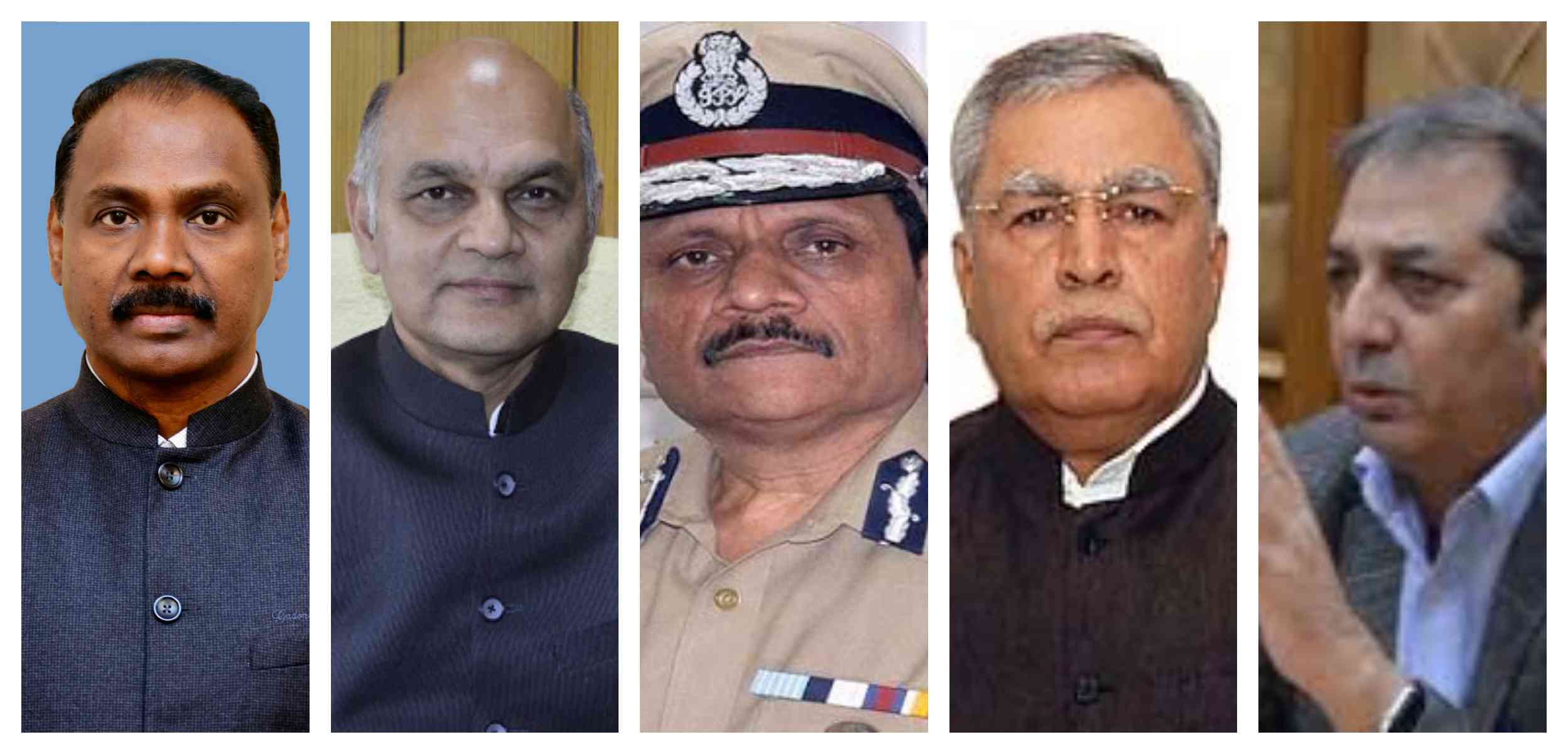
Since then, Kashmiris have disappeared from the core unit of the administration altogether. While the administration is closely controlled by the Union Ministry of Home Affairs – most important policy decisions have been announced by it – the lieutenant governor and his four advisors are now the face of government in Jammu and Kashmir. Each advisor has the powers of a minister, supervising different departments instead of holding portfolios. Three of the advisors are from Jammu. The fourth is from Uttar Pradesh. None of them is from the Kashmir Valley.
Faces of the Union Territory administration
GC Murmu, a 1985-batch Indian Administrative Service officer of the Gujarat cadre, served as principal secretary to Narendra Modi during his tenure as chief minister of Gujarat and later as expenditure secretary at the Centre. Back in 2004, he had also faced allegations that he “tutored” witnesses who appeared before the Nanavati Commission, set up to look into the 2002 Gujarat riots. The allegations were dismissed by the Supreme Court-appointed special investigation team. Murmu was appointed lieutenant governor on October 31.
Kewal Kumar Sharma, on the governor’s advisory council since 2018, continued with Murmu. A retired Indian Administrative Service officer from Jammu division’s Kathua district, he has been chief secretary of Delhi and Goa as well as advisor to the administrator of Chandigarh. He was also secretary in the Union human resources ministry in 2016. At present, Sharma supervises a wide range of departments – from revenue, planning development and industries to education and horticulture.
Also continuing from the 2018 advisory council is Farooq Khan, a former Indian Police Service officer from Jammu. After he retired from the police, Khan had joined the BJP at a public rally held by Modi in Kathua during the run up to the Lok Sabha elections of 2014. He is the grandson of Peer Mohammad Khan, the first state president of the Jammu and Kashmir Jana Sangh.