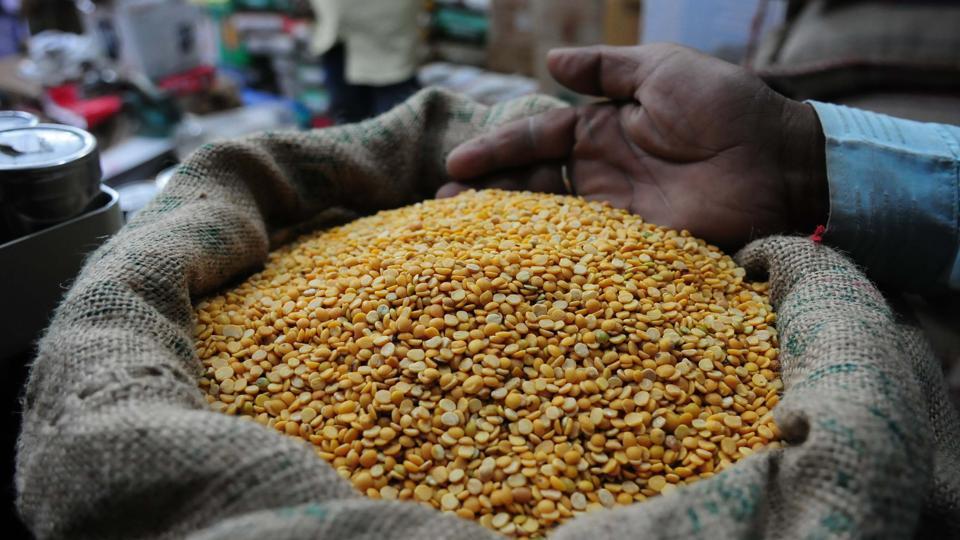
Lentils to India are as the meat loaf is to Europe and the United States. Ranging from yellow and red to deep black, these tiny disc-shaped members of the legume family are eaten in some form at least twice a day in ‘any self-respecting Indian household,’ according to Kavita Mehta, founder of the web-based Indian Foods Co. In fact, India is the world’s biggest producer and consumer of lentils, which are known here as daal. Cultivated from the earliest days of civilisation, lentils are somewhat indispensable to the Indian diet. Daal with rice either as a separate dish or combined and cooked as in the khichri (kedgeree), can be termed the national dish of India. It is a popular food of the rich as well as the poor, ruling the kitchen in all corners of the country, though different regions prefer different tastes, spices and combinations. The phrase, ‘sharing daal-roti’ has passed into our lexicon as a metaphor for bonding.
Lentils are of several kinds and each variety is as important as others. K.T. Achaya – eminent oil chemist, food scientist, nutritionist and food historian – in his book Indian Food: A Historical Companion (Oxford University Press; 1994), mentions that pulses of several kinds such as maashs (urad) mansura (masoor), mudga (moong) and kalaya (peas or matar) are mentioned in the Yajurveda. About a century later the Markandeya Purana and Vishnu Purana refer to chickpea (chana) as well. From Yajurveda onwards the three pulses masha, mudga and masura are evidently the most commonly and constantly used grain. Reference to masha occurs in the Rigveda. The dish kulmasha, which appears to have been masha dressed with a pat of gur (jaggery) and a few drops of oil, has the connotation of a poor man’s food in the Vedic period. It may have resembled the North Indian ghugni of the present day, a lightly dressed parched gram which is soaked overnight, steamed and flavoured with salt, lime juice, green chillies, chopped coriander leaves, chopped raw onions and a sprinkle of dry chaat masala powder. All the ingredients are tossed together and mixed properly. Rama apparently favoured a soaked raw daal preparation called kosumalli, consisting of diced cucumber, a sprinkle of coconut – all of it tossed in lemon juice.
The early literature of the Buddhists and the Jains (400 BC) reveals the use of new pulses kalaya (matar), adhaki (arhar or tuvar) and chanaka (chana), stated to have come from Alexandria. After 350 BC rajmasha (rajma) made its appearance and before the millennium ended and the Christian era began, a taboo against masha was announced. Pulses had been in use for the preparation of some sweets dating back to the late Buddhist period, such as mandaka (now called mande) – a large paratha stuffed with sweetened pulse paste and baked (as now) on an inverted pot.
In the first few centuries southern India made good use of pulses in different novel ways. Among the several pulses used in the southern cuisine of those days, two have found frequent mention. These were the kadalai (chickpea), which has been described as the bean which was fried in sweet-smelling oil and the kollu or mudhira (horse gram), which grew in the forest tract along with beans and lentils. Unfortunately urad, which is the most commonly used pulse of the south finds no mention in the literature of those days.
On Vinayaka Chaturthi in South India, salted preparation of whole soaked chickpea called sundal was necessary for the festival. In 2000 BC at several feasts only vadas were eaten and on purnamashi day and on deepavali sweets stuffed paratha (poli) were eaten. At the Tirupati temple dedicated to Lord Venkateshwara, after offering to the deity, pilgrims were given a prasad of urad laddus.
Achaya’s book describes how in the temple kitchen 30 cooks remained busy making approximately 70,000 laddus every day, for which 3 tonnes of urad daal, 6 tonnes of sugar and 2.5 tonnes of ghee, besides good amounts of raisins, cashew nuts and cardamom, were used.
Classical literature of India has interesting accounts on the use of lentils. King Someshwar of Kalyana in Madhya Pradesh, in his Manasollasa written about 1130 AD, mentions dishes in which pulses are the base while some were made using pulses with cereals. Vidalapaka was made from a mix of five pulse flours (chana, rajma, masoor, moong and parched tuvar), seasoned with rock salt, turmeric and asafoetida and cooked on slow heat. Similarly parika appears to have resembled the bonda of today, being described as cakes of besan, spiced with salt, pepper, asafoetida and sugar and finally fried in oil. Pulses were blended with vegetables or meat to prepare flavourful curries and this practice was much in vogue. Thus moong daal was seasoned with pieces of lotus-stem and chironji seeds, asafoetida and green ginger, fried in oil and boiled to a curry to which might have been added fried brinjal pieces, mutton pieces or even marrow, the dish being finished with black pepper and dry ginger. Dhosaka (dosa) and idarika (idli) were made only with pulses.
A 16th century work lists foods of the Gangetic plains as sattu (the flour of roasted pulses), and pulse preparations like bara (vada), pakauri (pakoda), identified as a boiled pakoda and the rolled up khandavi pancake, now identified with Gujarat. In Bihar several dishes were made using daal such as, bara – a patty of fried pulses, phulaura, which is like the present day dahivada, thilauri – balls of urad – or moong daal with sesame seeds, dried in the sun, and deep-fried. Kachauris were wheat cakes filled with spiced lentil.
In the east, however, masoor daal is a favoured food for the ill and recuperating and Bengal favours chholar daal (chana daal) for its various preparations during special social occasions and festivities.
Whether it is Gujarat in western India or U.P. in northern India, Bengal in eastern India or Tamil Nadu in southern India, a meal is not complete without a dish of daal made in different ways.